
Every year, across the plains of Tanzania and Kenya, one of nature’s most extraordinary journeys unfolds. More than a million wildebeest, accompanied by hundreds of thousands of zebra and gazelle, move in a vast, restless circle in search of fresh grass and water. The Great Wildebeest Migration is not a single event but a continuous, year-round cycle of birth, hunger, danger, and survival, and it is widely regarded as the largest overland mammal migration on the planet.
This guide explains how the migration works, where the herds are month by month, the best times to witness river crossings and calving, and how to plan a trip that puts you in the right place at the right time.
What Is the Great Wildebeest Migration?
The Great Migration is the circular movement of herds through the Serengeti-Mara ecosystem, a landscape spanning roughly 30,000 square kilometres across northern Tanzania and southwestern Kenya. Estimates generally place the number of wildebeest at around 1.3 to 1.5 million, joined by around 200,000 zebra and several hundred thousand Thomson’s and Grant’s gazelles, along with eland and other antelope.
The herds do not follow a calendar. They follow the rains. Wildebeest have an extraordinary ability to sense distant rainfall and the fresh, nutritious grass that follows, and the great loop of the migration is driven by that search. Over the course of a year, the animals may travel several hundred kilometres, with many estimates putting the full circuit at around 800 kilometres or more.
Why Do the Wildebeest Migrate?
The answer is simple: survival. The Serengeti’s short-grass plains in the south are rich in minerals and ideal for grazing and calving during the wet season. As those plains dry out, the herds must move north and west toward longer grasses and permanent water in the Mara region. When the rains return, they turn back south.
Zebra often lead, cropping the tall, coarse grass and exposing shorter, more nutritious growth that wildebeest prefer. Gazelles follow behind, feeding on what remains. This cooperative grazing sequence is one of the great ecological relationships of the African savanna.
The Migration Month by Month
Because the herds follow rainfall, exact timing varies from year to year. The following is a reliable general guide.
January to March: Calving Season in the Southern Serengeti
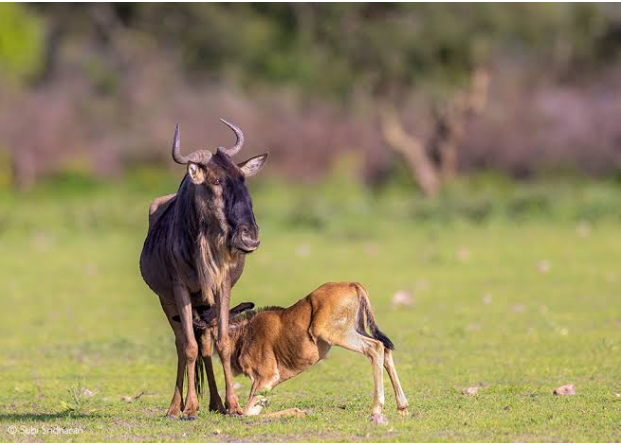
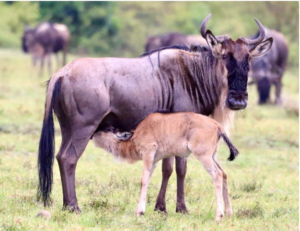
The herds gather on the nutrient-rich plains around Ndutu and the southern Serengeti. This is calving season, and it is spectacular. Hundreds of thousands of calves are born within a few weeks, with many thousands arriving on peak days. A newborn wildebeest can stand within minutes and run with the herd soon afterward, a vital adaptation in a landscape thick with predators.
This is also an outstanding time for predator action, as lions, cheetahs, leopards, and hyenas take advantage of the abundance of vulnerable young. It is also a green-season period with fewer visitors and often lower rates.
April to May: The Herds Start Moving
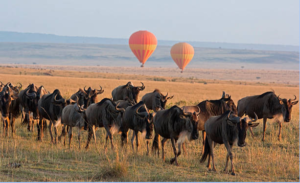
As the long rains arrive and the southern grasses are depleted, the herds begin to stream north and west, often forming enormous columns that stretch for kilometres across the plains. Central Serengeti, around Seronera, sees large concentrations. The landscape is lush, the skies dramatic, and the crowds are minimal, although heavy rain can make some roads challenging.
June to July: The Western Corridor and the Grumeti River
The herds push into the Western Corridor, where they meet the Grumeti River. Crossings here are less famous than those of the Mara River, but they are dramatic in their own right, with large crocodiles waiting in the water. The area is quieter, giving an intimate experience for travellers who prefer fewer vehicles.
July to October: The Mara River Crossings
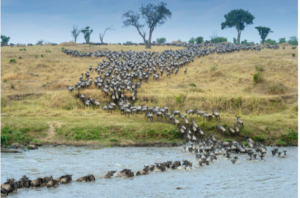
This is the migration’s most famous chapter. The herds gather in the northern Serengeti and push to the banks of the Mara River, a steep-sided, crocodile-filled barrier standing between them and the grasslands of Kenya’s Maasai Mara. Crossings can be chaotic and breathtaking, with thousands of animals plunging into the current at once, while crocodiles and, on land, lions and other predators lie in wait.
Crossings are unpredictable. Herds may gather at the riverbank for hours or days, hesitate, retreat, and then suddenly surge. Patience is the key to witnessing one.
October to December: The Return South
As the short rains begin, the herds drift back through the northern Serengeti, then south toward the plains where the cycle will begin again. Fewer visitors, good game viewing, and fresh green landscapes make this a rewarding time to travel.
Tanzania or Kenya: Where Should You Watch?
The migration crosses both countries, and each offers a distinct experience.
Tanzania’s Serengeti hosts the herds for most of the year, including calving in the south and the northern river crossings. It offers vast open landscapes, a wide choice of camps, and the option of mobile camps that relocate to follow the herds.
Kenya’s Maasai Mara receives the herds from roughly July to October. Private conservancies bordering the reserve limit vehicle numbers, allow night drives and walking safaris, and offer a more exclusive experience. The Mara is also excellent for big cats and is relatively compact, making wildlife easy to find.
Many travellers combine both countries over a longer itinerary to follow the herds across the border.
Predators and Perils on the Journey
The migration is as much a story of danger as of abundance. Nile crocodiles, some exceeding five metres, ambush crossing herds at rivers. Lions, leopards, cheetahs, and spotted hyenas follow the herds, preying on the weak, the young, and the unlucky. Drowning, exhaustion, and disease also take a toll, and hundreds of thousands of animals may die each year, mostly from natural causes.
Yet this cycle of loss and renewal is the foundation of the ecosystem. Carcasses feed vultures, hyenas, and other scavengers, while dung and decay enrich the soil, fuelling the grasses that sustain the herds. The migration is, in a very real sense, the engine of the Serengeti.
Best Time to See the Great Migration
There is no single best time. It depends on what you hope to experience.
- Calving and predator action: January to March, in the southern Serengeti and Ndutu.
- Dramatic river crossings: July to October, in the northern Serengeti and Maasai Mara, with August and September often the most reliable.
- Fewer crowds and lower rates: The green season, April to May and November, though weather is less predictable.
- Intimate wildlife viewing: Shoulder months, when herds are spread more widely but visitor numbers are lower.
Because the herds follow rainfall, no operator can guarantee exact locations. Staying at least four to five nights in a region improves your odds, and flexible, mobile camps can reposition as the animals move.
Tips for Planning Your Migration Safari
- Book early. Camps near the river crossings fill up a year or more ahead for peak season.
- Choose location over luxury alone. Being close to the herds matters more than any amenity.
- Consider a mobile camp. These seasonal camps follow the herds and offer a classic, immersive feel.
- Hire an expert guide. Skilled guides read the herds, anticipate crossings, and position vehicles ethically.
- Be patient. Crossings can take hours of waiting. Bring snacks, binoculars, and a good camera with a telephoto lens.
- Think about a balloon flight. Floating over the plains at dawn is an unforgettable way to see the herds.
- Respect the wildlife. Keep your distance and follow your guide’s instructions so the animals can cross undisturbed.
Conservation and Responsible Travel
The Serengeti-Mara ecosystem is protected by national parks, reserves, and community conservancies, and visitor fees help fund anti-poaching patrols, ranger salaries, and local development. Choosing operators that employ local people, protect habitats, and limit their environmental footprint helps ensure the migration endures. Threats such as habitat fragmentation, climate variability, and pressure on water sources make responsible tourism more important than ever.
Conclusion
The Great Wildebeest Migration is a reminder of nature’s scale and resilience. It is a never-ending story of birth, movement, danger, and renewal, played out across some of the most beautiful landscapes on Earth. Whether you witness newborn calves taking their first steps in the Ndutu plains or a thundering river crossing on the Mara, the experience is humbling and unforgettable. With thoughtful timing, a strong guide, and a little patience, you can stand in the middle of the world’s greatest wildlife spectacle and understand why it has captured the imagination of travellers for generations.
Key Takeaways
- The Great Migration is a year-round, circular journey of over a million wildebeest, plus zebra and gazelles, through the Serengeti-Mara ecosystem.
- The herds follow rainfall and fresh grass rather than a fixed calendar.
- January to March offers calving and predator action in the southern Serengeti.
- July to October offers the dramatic Mara River crossings in northern Tanzania and Kenya’s Maasai Mara.
- Crossings are unpredictable, so patience and an expert guide greatly improve your chances.
- Book early and stay several nights in the right region for the best experience.
- Responsible tourism supports the conservation that keeps the migration alive.
Frequently Asked Questions
What is the Great Wildebeest Migration? It is the annual, circular movement of more than a million wildebeest, along with zebra and gazelles, through the Serengeti in Tanzania and the Maasai Mara in Kenya, driven by the search for fresh grass and water.
When is the best time to see the migration? It depends on your goal. Calving is best seen from January to March, while the Mara River crossings are most commonly seen from July to October.
Where does the migration start and end? There is no true start or end, as it is a continuous cycle. Many describe it as beginning with calving in the southern Serengeti around Ndutu, from where the herds move north and west and eventually return south.
How many animals take part? Estimates put the number of wildebeest at roughly 1.3 to 1.5 million, along with around 200,000 zebra and several hundred thousand gazelles.
Can I see the migration all year round? Yes, although the location changes. At any time of year, large herds are somewhere in the Serengeti-Mara ecosystem, so a good operator will place you in the right area for your dates.
Are river crossings guaranteed? No. Crossings depend on the herds’ behaviour and are unpredictable. Staying several days near the river increases your chances considerably.
Is it better to visit Tanzania or Kenya? Both are excellent. Tanzania hosts the herds for most of the year, while Kenya’s Maasai Mara offers exclusive conservancies and prime river crossing viewing from around July to October. Many travellers visit both.
How far in advance should I book? For peak river-crossing season, book 9 to 12 months ahead, or earlier for popular camps. For calving season, 6 to 9 months is usually sensible.
Why do the wildebeest cross rivers? The herds must cross the Grumeti and Mara rivers to reach fresh grazing grounds. They are driven by instinct and the need for food and water, despite the presence of crocodiles.