
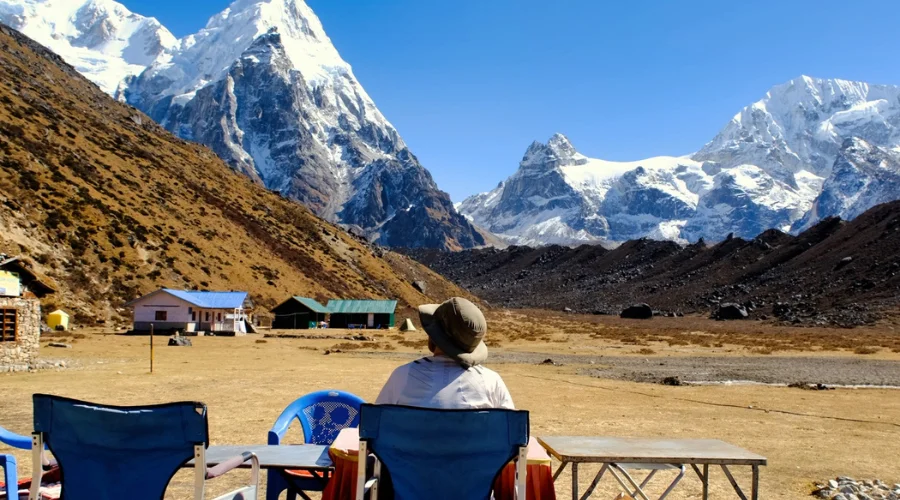
The Kanchenjunga Base Camp Trek is one of Nepal’s most extraordinary and least-explored trekking adventures, offering a rare opportunity to experience the untouched beauty of the eastern Himalayas. This trek takes you to the base of Mount Kanchenjunga (8,586 meters), the third-highest mountain in the world, straddling the border between Nepal and India. Renowned for its remoteness, cultural authenticity, and dramatic landscapes, the Kanchenjunga region is a paradise for experienced trekkers seeking solitude and raw natural beauty.
The journey typically begins with a flight from Kathmandu to Bhadrapur, followed by a long drive to the starting point at Taplejung. From here, the trail gradually winds through lush lowland villages, terraced fields, and subtropical forests before ascending into alpine terrain and glacial valleys. Unlike more commercialized trekking regions such as Everest or Annapurna, the Kanchenjunga region remains largely untouched by mass tourism, preserving its pristine environment and traditional way of life.
One of the most distinctive features of the Kanchenjunga Base Camp Trek is its dual-destination nature. Trekkers have the opportunity to visit both the North Base Camp (Pangpema) and the South Base Camp (Oktang). Each offers unique perspectives of the majestic Kanchenjunga massif. The northern base camp provides closer views of the towering peaks and glaciers, while the southern base camp offers sweeping panoramas of the mountain range framed by rugged ridgelines and lush valleys.
The trek passes through the Kanchenjunga Conservation Area, a protected region rich in biodiversity. This area is home to a remarkable variety of flora and fauna, including rhododendron forests, alpine meadows, and rare wildlife such as snow leopards, red pandas, Himalayan black bears, and musk deer. Birdwatchers will also find this region particularly rewarding, with numerous species inhabiting the forests and high-altitude landscapes. The changing ecosystems along the trail make each day of the trek visually and ecologically fascinating.
Cultural immersion is another highlight of the Kanchenjunga trek. The region is inhabited by diverse ethnic communities, including Limbu, Rai, Sherpa, and Tibetan-influenced groups. These communities have preserved their traditional lifestyles, customs, and languages over generations. Villages such as Ghunsa, Yamphudin, and Sekathum offer trekkers a chance to experience authentic Himalayan hospitality. Monasteries, prayer flags, and mani walls reflect the deep spiritual connection of the local people to the mountains.
The Kanchenjunga Base Camp Trek is physically demanding and typically takes around 20 to 25 days to complete. The route involves long walking days, steep ascents and descents, and high-altitude passes. Proper acclimatization is essential, as the North Base Camp reaches an elevation of approximately 5,143 meters. Due to the remoteness of the region, infrastructure is limited, and trekkers often rely on basic teahouses or camping arrangements. This adds to the sense of adventure but also requires careful planning and preparation.
One of the most rewarding aspects of the trek is the sense of isolation and tranquility it offers. Unlike crowded trails, trekkers here can walk for hours without encountering others, allowing for a deeper connection with nature. The dramatic scenery—towering
peaks, cascading waterfalls, deep river gorges, and expansive glaciers—creates an unforgettable visual experience.
Weather conditions in the Kanchenjunga region can be unpredictable, particularly at higher elevations. The best seasons for trekking are spring (March to May) and autumn (September to November), when the skies are clear and the views are at their best. During spring, the forests come alive with blooming rhododendrons, while autumn offers crisp air and stunning mountain vistas.
In addition to its natural and cultural significance, the Kanchenjunga region plays an important role in conservation efforts. As a restricted trekking area, special permits are required, and trekkers must travel with a registered guide. These regulations help protect the fragile ecosystem and support sustainable tourism practices that benefit local communities.
In conclusion, the Kanchenjunga Base Camp Trek is a true hidden gem in the Himalayas, offering an unparalleled combination of adventure, solitude, and cultural richness. It is a journey that challenges both body and mind while rewarding trekkers with some of the most spectacular and unspoiled landscapes on Earth. For those willing to venture off the beaten path, the Kanchenjunga trek promises an experience that is as profound as it is unforgettable.