
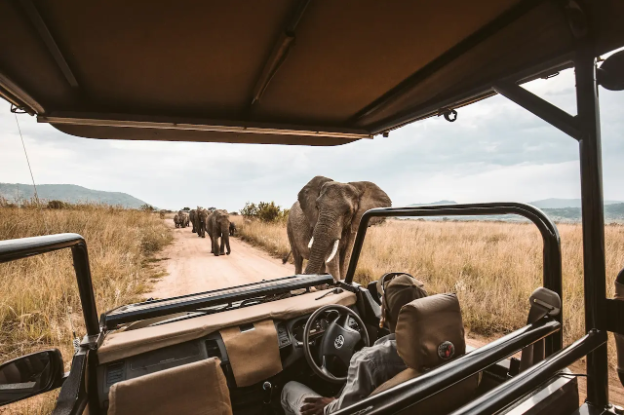
Beyond the game drive — Tanzania’s most specific, most memorable, and most transformative safari experiences define the difference between a good safari and a legendary one.
Introduction
Ask a hundred specific safari experiences travelers what single moment from their time in Africa they return to most often in memory, and the answers are rarely generic. They do not say “the wildlife was amazing” or “the sunsets were beautiful.” They describe something specific: the morning they watched a cheetah mother teach her cubs to hunt on the Serengeti’s southern plains. The hour before dawn when the Mara River crossing began and every other sound in the world went silent. The afternoon when a black rhinoceros walked within twenty meters of their vehicle in the Ngorongoro Crater and turned to regard them with ancient, calm eyes.
Specificity is the currency of extraordinary safari experience. The generic game drive — board a vehicle, drive through a park, observe animals — is the foundation of the safari format and is, on its own, capable of producing moments of extraordinary wildlife encounter. But Tanzania’s most experienced operators and guides understand that the difference between a good safari and a genuinely transformative one lies in the specific experiences layered within and around the game drives: the activities, the timings, the settings, and the particular encounters that are designed, anticipated, and created through expertise and deep ecological knowledge.
This article explores Tanzania’s most significant and most sought-after specific safari experiences — from the iconic hot air balloon flight over the Serengeti to the intimate vulnerability of a guided walking safari, from the ancient drama of a river crossing to the rare and precious encounter with a black rhinoceros at the Ngorongoro Crater. These are the experiences that define a Tanzania safari at its finest — the moments that, years later, are still the first ones recalled.
The Great Migration River Crossings
The Most Dramatic Wildlife Spectacle on Earth
If there is a single safari experience that supersedes all others in raw, overwhelming wildlife drama, it is the Great Migration river crossing in Tanzania’s northern Serengeti. Every year, between July and October, the wildebeest migration — comprising over 1.5 million animals — reaches the Mara River, a crocodile-filled waterway that separates Tanzania from Kenya’s Maasai Mara. What follows is one of the natural world’s most primal and most cinematic events.
Columns of wildebeest gather on the southern bank — hundreds of thousands of animals stretching back kilometers across the plains. The leading animals approach the water’s edge, look down at the dark, churning river where enormous Nile crocodiles lie in patient wait, and hesitate. Sometimes they stand at the water’s edge for hours, the pressure of hundreds of thousands of animals behind them building against the fear of what lies ahead. And then — triggered by some collective instinct no biologist has fully explained — the crossing begins.
The noise is extraordinary: hooves on dry earth becoming hooves on wet rock, the splash and surge of thousands of animals entering the water simultaneously, the calls of wildebeest echoing against the Mara’s steep banks. Crocodiles surge. Some animals stumble. The majority cross, scramble up the far bank, and keep running. The entire event can last minutes or hours, and experienced guides who know the Mara River’s crossing points can position vehicles in advance for sightings that are simultaneously terrifying and magnificent.
Witnessing a river crossing is an experience that fundamentally recalibrates a traveler’s sense of what the natural world is capable of. It is not merely impressive — it is overwhelming in a way that produces a particular, lasting humility.
The Hot Air Balloon Safari
Serengeti at Sunrise, From the Sky
The hot air balloon safari over the Serengeti is Tanzania’s most celebrated specific safari experience — the activity that consistently ranks highest in post-journey reviews, that produces the most emotional traveler testimonials, and that is most frequently cited as the single most memorable hour of an entire East African journey.
The experience begins before dawn. Guests are collected from camp in darkness, transferred to the balloon launch site where the enormous envelope is being inflated against the pre-dawn sky, and introduced to their pilot. As the first light touches the eastern horizon, the balloon lifts silently from the earth and begins its ascent over the waking Serengeti.
For one hour, the balloon drifts at varying altitudes over the plains — sometimes low enough to observe individual animals clearly, sometimes high enough to see the ecosystem’s full scale spread to every horizon. The silence is absolute except for the occasional burst of the burner. No engine, no road noise, no vehicle vibration — just the African dawn unfolding beneath you as the world’s greatest wildlife ecosystem comes to life.
The flight concludes with a champagne breakfast served in the bush — white linen, crystal glasses, fresh-baked bread, and fresh fruit arranged on a table set in the middle of the open Serengeti, accompanied by a personalized flight certificate and the particular satisfaction of having seen Africa from its most extraordinary perspective.
Balloon safaris are available year-round from the central Serengeti at Seronera and seasonally from the northern Serengeti during migration season. The cost of approximately USD 500 to USD 600 per person must be pre-booked through your operator. Weight restrictions of 100 kilograms per passenger typically apply. For honeymooners, anniversary travelers, and any visitor for whom the Serengeti represents a once-in-a-lifetime destination, the balloon safari is not optional — it is essential.
The Guided Walking Safari
The Bush at Ground Level — Where Everything Changes
There is a fundamental difference between observing Africa from the elevated, protected vantage of a safari vehicle and meeting Africa at ground level, on foot, as your distant ancestors did. The guided walking safari makes the latter possible — and in doing so, transforms the entire safari experience by revealing a dimension of the bush that the vehicle, for all its advantages, cannot access.
Walking safaris are available in several Tanzania locations, including designated walking areas within the Ngorongoro Conservation Area, the Ruaha National Park, and private conservancies adjacent to the Serengeti. They are conducted by highly trained, armed Tanzania Wildlife Management Authority (TWMA) licensed guides with deep ecological knowledge and years of bush experience.
On a walking safari, the scale of perception shifts entirely. The elephant that seemed enormous from the vehicle becomes overwhelming on foot — not in a frightening way, when properly managed, but in a way that produces a physical, visceral understanding of this animal’s presence in the world that no vehicular encounter can replicate. The tracking of animal spoor in soft earth, the identification of predator kills by the pattern of scattered feathers, the silent hand signals that communicate a lion’s position fifty meters ahead through the long grass — all of these elements create an engagement with the bush of a fundamentally different, fundamentally richer kind.
Walking safaris also reveal the micro-level ecology of the African bush — the termite architecture that builds towers resistant to elephant trampling, the dung beetle navigating by the Milky Way, the intricate relationships between specific tree species and the browsers that depend on them. Experienced walking guides deliver these details with a depth and passion that transforms a two-hour walk into a masterclass in African ecology.
The Black Rhinoceros Encounter
Africa’s Most Precious Big Five Sighting
Among all specific wildlife encounters available in Tanzania, the black rhinoceros sighting carries a particular weight of significance — not merely because it is rare, though rarity is part of it, but because encountering a black rhino in the wild today is an encounter with survival itself, with a species that came within a small number of individual animals of extinction through the poaching crisis of the 1970s and 1980s.
The Ngorongoro Crater holds one of Africa’s most important and carefully protected wild black rhino populations — approximately 20 to 30 individuals monitored by dedicated NCAA rangers and international conservation organizations. The crater’s open grassland floor makes rhino sightings significantly more achievable here than in the dense bush habitats where the species is typically found elsewhere, and the Ngorongoro Conservation Area Authority’s protection has allowed this population to stabilize and cautiously grow.
When a rhino is located — typically by the tracker’s scanning of the open plains, recognizing the particular prehistoric silhouette — vehicles position carefully and quietly at a respectful distance. The rhino, largely solitary and powerfully built, may graze with apparent indifference to the vehicles, or may raise its head and test the air with its extraordinary sense of smell. Either way, the encounter creates a quality of silence among observers that has nothing to do with park rules and everything to do with the weight of what is being witnessed: an animal that almost wasn’t here, still here, in the ancient caldera where it belongs.
The Cheetah Hunt
Speed and Precision on the Open Plains
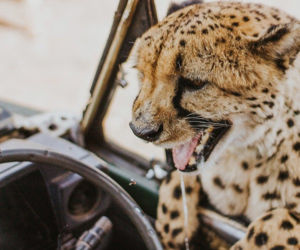
The cheetah is the most openly theatrical of Africa’s great predators — the one that hunts by day, on open ground, at speeds that the human eye can barely track. A cheetah hunt on the Serengeti’s southern or central plains is among the specific safari experiences that produces the most intense, most focused wildlife encounter available anywhere in Tanzania.
Cheetah are most frequently encountered in the Serengeti’s open grassland zones, where a mother with sub-adult cubs provides the most sustained viewing opportunities — the patient stalking approach, the explosive acceleration across five hundred meters in under twenty seconds, and then either the successful catch and suffocation or the failed hunt and the dignified return. Each sequence teaches the observer something about predation, about evolutionary elegance, and about the extraordinary physical design of this animal that nothing a nature documentary can convey with the same immediacy.
Experienced Serengeti guides who know the resident cheetah families by individual identification can significantly improve the probability of hunting encounters — positioning vehicles downwind and at distances that do not interrupt the hunt’s natural progression.
Night Game Drives
The Bush After Dark
The African bush at night is a different world — governed by different sensory hierarchies, populated by species rarely seen in daylight, and experienced in a quality of darkness that most modern travelers have never encountered. Night game drives, available in private conservancies adjacent to Serengeti National Park and in southern circuit parks such as Nyerere and Ruaha, reveal this world with the assistance of a powerful handheld spotlight operated by an expert tracker.
Nocturnal encounters exclusive to night drives include African civet, genet, serval, bush baby, aardvark, porcupine, African wild cat, spring hare, and the extraordinary diversity of nocturnal owl and nightjar species. Predator activity is often at its most intense in the hours after dark — lion prides moving toward waterholes, leopards returning from kills, hyena clans vocalizing in the darkness as their complex social hierarchies play out in the night air. The handheld spotlight captures eye-shine across the plains and bush, revealing a population of wildlife activity that the daytime visitor never witnesses.
The Boat Safari — Nyerere National Park
Wildlife Encounter From the Water
The boat safari on the Rufiji River in Nyerere National Park offers a specific wildlife experience available nowhere in Tanzania’s northern circuit — an intimate, ground-level encounter with Africa’s aquatic wildlife from a small motorized vessel navigating channels, oxbow lakes, and river margins dense with hippo, crocodile, elephant, and waterbird life.
From a boat, the perspective on hippo behavior transforms entirely. What is an occasional waterhole visitor in the northern parks is revealed, on the Rufiji, as the dominant ecological architect of the river system — wallowing in pods of dozens, vocalizing, interacting, and emerging from the water at dusk in processions that create some of Tanzania’s most dramatically composed wildlife photography. Nile crocodiles are encountered at eye level, resting on sandbanks within meters of the vessel. Elephant herds wade through river shallows. African fish eagles call from riverside trees. The boat safari is a masterpiece of ecological intimacy that every dedicated Tanzania safari traveler should experience at least once.
Cultural Encounters: The Maasai Experience
Living Culture Within the Wildlife Landscape
The Ngorongoro Conservation Area is one of very few places in Africa where traditional pastoral culture and major wildlife conservation coexist in formal, managed cohabitation. The Maasai people who inhabit the crater highlands maintain livestock herding practices that have shaped this landscape for centuries, and culturally managed visits to Maasai boma communities — arranged through responsible operators who share revenue directly with community members — provide a specific safari experience of profound human richness.
A well-conducted Maasai cultural visit reveals the extraordinary ecological knowledge embedded in pastoral culture: the cattle management strategies that prevent overgrazing, the medicinal plant knowledge that represents millennia of accumulated botanical understanding, the architectural ingenuity of the enkiama homestead built without mechanical tools, and the ceremonial traditions that structure Maasai social life from childhood through elderhood. This is not a performance for tourists but a living culture encountered respectfully — and the encounter enriches the broader safari experience by revealing that the wildlife landscape of Tanzania has been shaped by human presence as much as by geological and ecological forces.
Key Takeaways
- Specific safari experiences — beyond standard game drives — define the difference between a good Tanzania safari and a genuinely legendary one, creating the particular memories that last a lifetime.
- Mara River crossings (August–October, northern Serengeti) are the single most dramatic specific wildlife spectacle available in Tanzania — the culminating event of the Great Migration’s northern chapter.
- The hot air balloon safari over the Serengeti is the most consistently celebrated specific experience in Tanzania — essential for first-time visitors, honeymooners, and any traveler for whom the Serengeti represents a once-in-a-lifetime destination.
- Guided walking safaris transform the safari experience by delivering ground-level ecological engagement — micro-level bush detail and physical wildlife proximity that vehicular game drives cannot provide.
- The black rhinoceros encounter at Ngorongoro Crater carries a particular conservation significance — an encounter with a species that survived near-extinction and whose continued presence represents one of Africa’s most important conservation achievements.
- Cheetah hunt encounters on the Serengeti’s open plains deliver the most openly theatrical predator spectacle in Africa — accessible with the assistance of experienced resident cheetah-tracking guides.
- Night game drives in private conservancies reveal a nocturnal wildlife world of extraordinary diversity entirely invisible during standard daytime safari hours.
- Boat safaris on the Rufiji River at Nyerere National Park deliver hippo, crocodile, and elephant encounters of intimate ground-level proximity unavailable anywhere in the northern circuit.
- Maasai cultural visits in the Ngorongoro Conservation Area add a human dimension of exceptional depth to the safari experience — revealing the living culture that has coexisted with Tanzania’s wildlife for centuries.
- The quality of the guide is the single most important determinant of specific experience quality — deep ecological knowledge, animal behavioral expertise, and the ability to anticipate and position for rare encounters separates transformative guides from competent drivers.
Questions & Answers
Q: Which specific safari experience in Tanzania is most worth the additional cost? The hot air balloon safari over the Serengeti represents the strongest value proposition among Tanzania’s premium specific experiences, both for the quality of the encounter and its universal applicability across traveler types. At USD 500 to USD 600 per person, it is the most expensive single activity available on a Tanzania safari but also the most consistently cited as worth every dollar by travelers who complete it. For wildlife-focused travelers, a witnessed cheetah hunt or Mara River crossing produces equally powerful memories at no additional cost — requiring only good timing, positioning, and an expert guide. The boat safari at Nyerere adds exceptional value to a southern circuit itinerary at relatively modest cost. In all cases, the investment in an experienced, specialized guide yields returns in specific encounter quality that exceed any paid activity by a substantial margin.
Q: How do I maximize the chances of witnessing a Mara River crossing? River crossing probability is maximized by a combination of timing, positioning, and patience. Visit the northern Serengeti between late July and mid-October when the herds are most consistently present in the Mara River zone. Stay a minimum of three nights in the northern Serengeti at a camp close to the primary crossing points — Kogatende, Lamai, and the Mara River camps are all well-positioned. Spend extended time at the river rather than brief visits — crossings often begin after hours of buildup at the bank’s edge, and departing too early is the most common reason for missed crossings. Work with a guide who monitors radio communication with other vehicles and knows the specific crossing points that the herds favor in different water conditions. Full-day positioning at the river rather than two-hour visits is the strategy that consistently produces results.
Q: Is a walking safari safe for travelers who have no previous bush experience? Walking safaris in Tanzania are conducted under strict safety protocols managed by highly trained, armed TWMA-licensed guides with extensive bush experience. The risk to inexperienced walkers is managed through careful route selection, group size limitations, mandatory pre-walk safety briefings, and the guide’s continuous assessment of wildlife proximity and terrain. Most walking safari operators require minimum fitness levels — the ability to walk for two hours over uneven terrain — but no previous bush experience. Nervous travelers should discuss concerns explicitly with their operator and guide; the finest walking guides are skilled at calibrating the experience to the comfort level of individual participants. The vast majority of walkers, regardless of prior experience, describe post-walk relief, exhilaration, and a profound sense of achievement as their dominant emotional response.
Q: Can children participate in specific safari experiences like balloon safaris and walking safaris? Age and weight restrictions apply to several specific experiences. Hot air balloon safaris typically require a minimum age of seven years and weight limits of 100 kilograms per passenger. Walking safaris generally require a minimum age of twelve to sixteen years depending on the operator, as the ability to follow silent guide instructions without hesitation in close wildlife proximity is essential for safety. Night game drives are suitable for children of most ages in appropriate vehicles. Boat safaris at Nyerere are generally suitable for children of school age and above. Cultural Maasai visits are excellent for children of all ages — the interactive, sensory-rich character of a boma visit engages younger travelers in ways that extended game drives sometimes cannot. Always confirm age and weight requirements for each specific experience with your operator well in advance of travel.
Q: What is the best specific experience for first-time Tanzania safari travelers? For a first-time visitor, the hot air balloon safari is the single specific experience most transformative in impact — it provides an aerial perspective of the Serengeti that contextualizes every ground-level game drive that follows, revealing the ecosystem’s true scale and the extraordinary density of its wildlife in a way that nothing else delivers. The Ngorongoro black rhinoceros encounter, while not guaranteed, carries an emotional weight of conservation significance that deeply affects first-time visitors who understand the species’ near-extinction history. And for travelers visiting between August and October, a Mara River crossing witnessed from a well-positioned vehicle requires no additional cost or booking — only the right guide and sufficient time at the river. The combination of a balloon safari at the start of the Serengeti stay and extended river positioning toward the end creates a first Tanzania safari of genuinely extraordinary specific experience.
Q: How does the quality of a safari guide affect specific wildlife experiences? The guide’s impact on specific experience quality is, quite simply, the most significant variable in the entire safari. A guide with deep ecological knowledge, years of specific park experience, and genuine passion for the wildlife they interpret does not merely drive animals — they anticipate where animals will be based on time of day, season, water availability, prey movement, and behavioral patterns accumulated over years of observation. They position the vehicle for optimal viewing angles before the animal arrives rather than after. They identify subtle behavioral cues that indicate a hunt is building or a crossing is imminent. They know which individual cheetah families are currently resident on the southern plains and where they habitually rest at mid-morning. They transform a game drive into a masterclass in African ecology by narrating what they observe with the depth and specificity of a naturalist rather than a driver. The difference between a guide of this caliber and a merely competent driver is the difference between witnessing a lion kill and driving past a lion that had a kill two hours earlier.
Conclusion
A Tanzania safari is, at its most basic, a journey into the world’s greatest wildlife landscape — a privilege of access to wild nature of a quality and intensity that no other destination on Earth offers with comparable consistency. But within that journey, the specific experiences — the activities, the timings, the encounters, the moments of extraordinary particularity — are what transform a safari from a series of impressive sightings into a genuinely life-defining experience.
The balloon that lifts you into the Serengeti dawn. The rhino that raises its ancient head and tests the crater air in your direction. The moment before the river crossing when fifty thousand wildebeest are standing at the bank’s edge and the world is completely silent with the weight of what is about to happen. The walking guide’s hand raised in a silent signal as he pointed to the lion resting twenty meters ahead through the long grass. The dhow returned across the Zanzibar harbor at dusk, the Indian Ocean turning amber around its hull, the day entirely, perfectly complete.
These are not random encounters. They are the product of expertise, timing, ecological knowledge, and the irreplaceable guidance of people who have spent their lives in these extraordinary places and who carry within them a depth of understanding about the natural world that formal education cannot replicate. They are specific. They are particular. They are, ultimately, what a Tanzania safari actually is — when it is done at its best.
Seek them out deliberately. Trust your guide completely. Be patient. Be present. And let Tanzania’s specific safari experiences do what they have done for every traveler fortunate enough to encounter them: make the world feel larger, wilder, more beautiful, and more worthy of protection than ordinary life allows us to remember.